

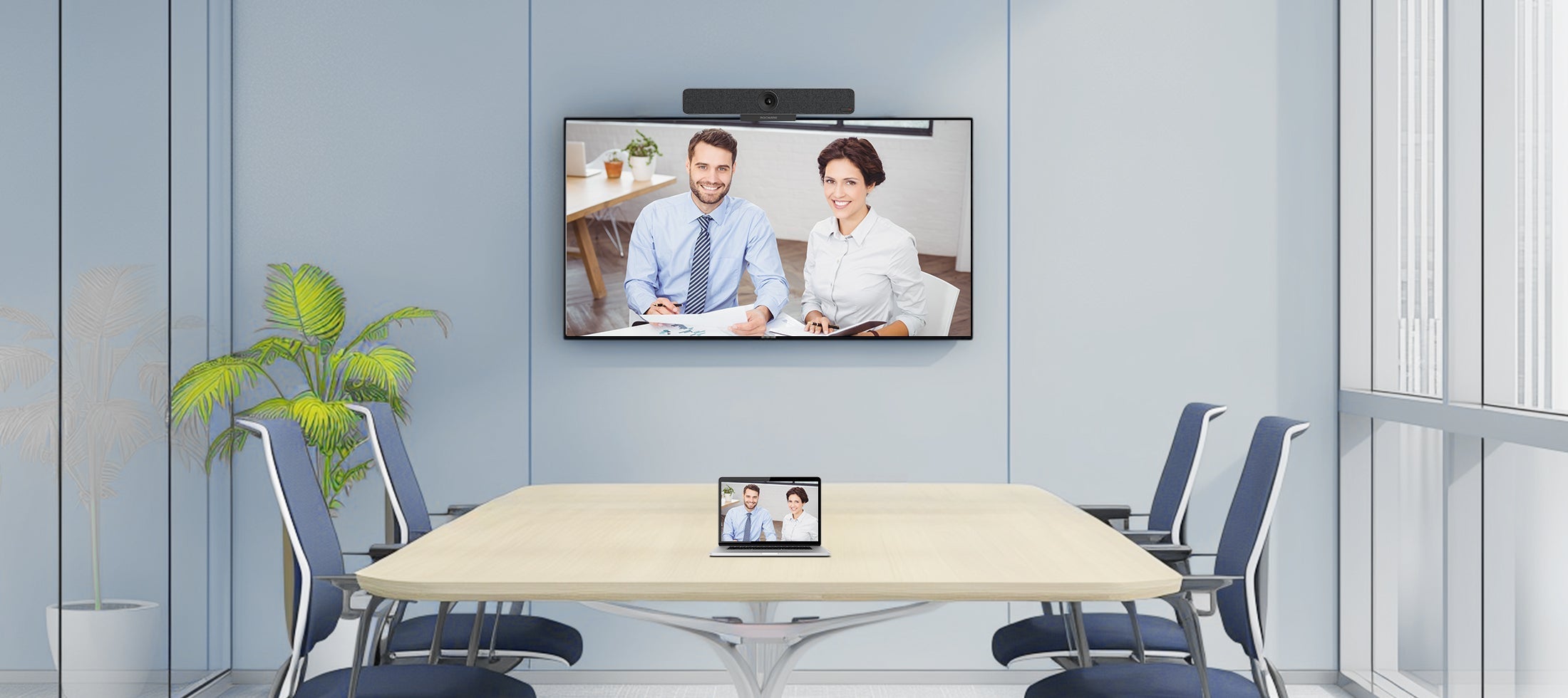
Video conferencing has quickly evolved from a helpful tool into a business essential.
As hybrid work becomes the standard, companies are rethinking how teams connect across offices, homes, and time zones. Meetings are no longer confined to a single room—and the technology supporting them can’t be either.
That’s why organizations are investing more heavily in video conferencing technology than ever before. This shift isn’t just about keeping up—it’s about creating better experiences, improving productivity, and enabling teams to do their best work from anywhere.
Here’s what’s driving that investment in 2026.
1. Hybrid Work Is the New Reality
For most organizations, hybrid work is no longer an experiment—it’s the default.
With employees splitting time between home and the office, every meeting must work seamlessly for everyone involved, regardless of location. When the experience isn’t consistent, collaboration quickly breaks down.
To solve this, companies are standardizing their video conferencing setups and upgrading meeting room technology to ensure a reliable experience across the board. The goal is simple: whether you’re dialing in remotely or sitting in the room, the meeting should feel the same.
This is especially important in huddle and small meeting spaces, where simple, consistent setups can make or break the meeting experience.
2. The Employee Experience Matters More Than Ever
As expectations around work continue to evolve, so do expectations around meeting quality.
No one wants to struggle through poor audio, lagging video, or feeling invisible in a conversation. These small frustrations add up—and over time, they can impact engagement, collaboration, and even retention.
That’s why companies are prioritizing tools that create a more inclusive and seamless meeting experience. High-quality audio, clear video, and intelligent camera systems help ensure that every participant feels seen, heard, and able to contribute.
3. AI Is Raising the Standard for Meetings
At the same time, advances in AI are transforming what video conferencing technology can do.
What used to be a static experience is now dynamic and responsive. Cameras can automatically frame participants, track speakers, and adjust in real time. Audio systems can filter out background noise and enhance clarity without manual input.
These features don’t just improve quality—they remove friction. Meetings become easier to run, more engaging to join, and more productive overall.
As a result, more companies are investing in AI-powered solutions to elevate their meeting experience without adding complexity.
4. Productivity Starts with Better Meetings
Inefficient meetings are one of the most common (and costly) workplace challenges.
When technology slows things down—whether it’s troubleshooting equipment or repeating missed information—teams lose valuable time and momentum.
That’s why organizations are focusing on reliability and simplicity. By upgrading outdated systems and streamlining meeting room setups, they’re reducing delays and helping teams stay focused on what actually matters: making decisions and moving work forward.
In many cases, better technology isn’t just improving meetings—it’s improving overall productivity.
5. Distributed Teams Need Stronger Connections
Today’s teams are more distributed than ever, often spanning cities, countries, and continents.
Video conferencing plays a critical role in keeping those teams aligned. It enables real-time collaboration, faster communication, and stronger relationships—even when people are physically apart.
To support this, companies are investing in scalable solutions that deliver consistent performance across locations. The goal is to make distance irrelevant and ensure that every team member can fully participate, no matter where they are.
6. Meeting Rooms Are Getting a Smart Upgrade
As expectations rise, the meeting room itself is evolving.
Instead of relying on disconnected tools and complicated setups, organizations are moving toward integrated, all-in-one solutions designed for simple deployment. Many now support BYOD with a single USB-C connection and HDMI to the display, reducing cable clutter and making them ideal for huddle and small meeting rooms.
The result is a smarter, more streamlined meeting environment—one that reduces setup time, minimizes technical issues, and creates a more polished experience for everyone involved.
Final Thoughts
The increase in video conferencing investment reflects a larger shift in how work happens today.
Companies are no longer asking whether they need better meeting technology—they’re recognizing that it’s essential for supporting hybrid teams, improving employee experience, and driving productivity.
At Rocware, we’re seeing this shift firsthand as organizations prioritize simpler, smarter and more scalable meeting room solutions that support seamless communication experiences for hybrid work without adding complexity.
And for many businesses, that’s an investment worth making.

Share:
Is Your Meeting Room Ready for the Future of Hybrid Work?
Remote Participants Feeling Left Out? Here’s Your Hybrid Meeting Checklist